Residential Electrician Tips for Protecting Home Electronics
Modern homes carry more sensitive electronics than most homeowners realize. It is not just the obvious big-ticket items like televisions, computers, and gaming systems. Refrigerators now have control boards. Furnaces and air handlers rely on circuit boards and communicating thermostats. Washers, dryers, garage door openers, security systems, routers, smart speakers, and even LED lighting can be vulnerable to voltage irregularities. When one electrical problem ripples through a house, the damage can reach far beyond a single outlet.
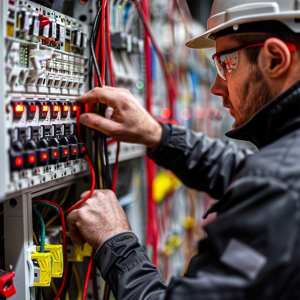
A seasoned Residential Electrician learns quickly that homeowners often think about electricity in simple terms: either the power is on or it is off. Electronics do not experience it that way. They live in the gray area between normal and harmful. Slight overvoltage, repeated micro-surges, poor grounding, overloaded circuits, loose neutrals, and utility switching events can all shorten the life of equipment long before a dramatic failure gets anyone’s attention.
Protecting home electronics is partly about hardware, partly about maintenance, and mostly about judgment. The best approach depends on the age of the home, the quality of the wiring, local weather patterns, the utility supply, and the type of equipment inside. A downtown condo with underground service has a different risk profile than a rural house with overhead lines and frequent lightning.
Why electronics fail more often than homeowners expect
When people hear the phrase power surge, they usually picture lightning. Lightning matters, especially in storm-prone regions, but it is only one source. In practice, a lot of electronic damage comes from smaller, more frequent events. Utility switching, large motors cycling on and off, neighborhood grid disturbances, and internal house loads can all create transient voltage spikes. A central air conditioner starting on a hot afternoon can create stress inside a home’s electrical system. The same goes for a well pump, an older refrigerator compressor, or a workshop tool with a hungry motor.
Those smaller events may not destroy a device instantly. Instead, they chip away at it. A television that should last eight or ten years starts having power board problems after five. A modem becomes unreliable for no obvious reason. A microwave display flickers, then fails. From a service perspective, this is what makes electronic protection tricky. The homeowner often notices only the final symptom, not the long sequence of abuse that caused it.
There is another layer to the problem: modern electronics are more efficient, but many are also less tolerant of dirty power. A bulky old stereo receiver could absorb conditions that would upset a current smart home hub or mesh router. The shift to compact switch-mode power supplies improved energy use and reduced heat, but it also made proper surge protection and grounding more important.
The first place I look is the electrical service
If a homeowner asks how to protect electronics, I rarely begin with plug-in power strips. I begin at the service equipment. That is where the whole house either gets a fighting chance or stays exposed.
A home’s service panel, grounding electrode system, and neutral connections form the foundation for protection. If any of those pieces are compromised, expensive surge strips at the point of use become a partial solution at best. A whole-house surge protective device installed at the panel is often the most practical first move. It does not replace point-of-use protection, but it reduces the energy that gets deeper into the house.
Good protection depends on a short, effective path to ground. If the grounding system is poor, if the neutral is loose, or if the panel has https://simonaetv335.cloudhinter.com/posts/residential-electrician-tips-for-childproofing-electrical-systems age-related issues, surge energy may not be handled the way the homeowner expects. In older homes, I often find grounding that met an earlier standard but falls short for today’s electronic loads. I also find panels where homeowner modifications, corrosion, or sloppy terminations created weak points.
A whole-house surge protector is one of the best values in residential electrical work when it is installed correctly. The cost is modest compared with replacing several appliances or a home office setup. But it is not magic. A surge device cannot compensate for a damaged service entrance conductor or a badly bonded system. It has to be part of a sound installation, not a bandage over a deeper defect.
Grounding is not glamorous, but it saves equipment
Homeowners do not get excited about grounding electrodes, bonding jumpers, or neutral terminations. They should, because those details often decide whether sensitive equipment survives a rough electrical event.
Grounding has two jobs in this discussion. First, it helps stabilize the electrical system and create a reference point. Second, it provides a path that allows protective devices to do their work. If the path is poor, resistance is high, or connections are deteriorated, protection suffers.
I once inspected a house where the owner had replaced three cable modems and two smart televisions in less than four years. He blamed the cable company, then the television brand, then bad luck. The actual issue was a combination of problems: an aging panel, a loose grounding connection outside, and no whole-house surge protection. The modem was especially vulnerable because it sat at the intersection of power and communication lines. Once the grounding and surge protection were corrected, the failures stopped.
That kind of case is common enough that I now ask specific questions whenever electronics fail repeatedly. Is the damage random, or does it hit devices connected to outside wiring, like cable, phone, satellite, or Ethernet runs to detached structures? Does it happen after storms, during peak cooling season, or after utility work in the neighborhood? Those patterns matter.
Plug-in surge protectors help, but quality matters
The average homeowner owns at least one power strip and assumes it is a surge protector. Many are not, and some that are provide minimal protection. A cheap strip can be little more than extra receptacles in a plastic shell. It may have a light that suggests safety while offering only basic suppression.
Quality point-of-use surge protectors still matter, especially for home offices, entertainment centers, and networking gear. They handle residual surges that get past the service equipment and offer a second layer close to the device. That layered approach is what I recommend most often: whole-house protection at the panel, then quality surge protection where sensitive electronics live.
There are trade-offs. A homeowner may not want every lamp and charger plugged into a large surge unit. That is fine. Protect the equipment that is expensive, mission-critical, or especially sensitive. Computers, monitors, network equipment, televisions, gaming consoles, smart home hubs, and higher-end kitchen appliances deserve attention first.
The weak point with plug-in surge protectors is that they age. Many people keep them in service for a decade or more without realizing their protective components can wear out. The strip may still power the equipment even when its surge protection has degraded. That is why I tell homeowners to treat these devices like safety equipment, not permanent furniture.
Not all rooms have the same risk
A thoughtful Residential Electrician does not give blanket advice without looking at how each area of the house is used. Electronics in a bedroom are not exposed in the same way as electronics in a garage workshop or near a service entrance.
Home offices deserve special consideration because downtime there costs more than replacement value alone. Losing a router, monitor, docking station, and desktop at once is expensive, but losing unsaved work or access during a deadline can be worse. Entertainment centers are another trouble spot because they often combine multiple vulnerable paths: power, cable or fiber equipment, streaming hardware, sound systems, and gaming devices all tied together.
Garages and basements can be rougher environments due to dust, humidity, temperature swings, and heavier motor loads nearby. If a freezer shares a circuit with miscellaneous tools, chargers, or old receptacles, that setup deserves a closer look. Detached structures, such as sheds or garages with subpanels, add more complexity because long feeder runs and grounding details become part of the picture.
Kitchen electronics are a growing category. Refrigerators, wall ovens, induction cooktops, and even dishwashers can contain boards that are costly to replace. In older homes with marginal branch circuits, I pay attention to voltage drop, shared loads, and whether large appliances are operating on circuits that have seen too many informal modifications over the years.
The hidden threat of loose connections and overloaded circuits
Surges get a lot of attention, but poor connections damage electronics too. A loose neutral, backstabbed receptacle failing under load, overheated breaker connection, or crowded multi-use circuit can create unstable conditions that sensitive devices hate.
You do not always see a dramatic trip or burned wire. Sometimes the warning signs are subtle: lights brighten and dim unexpectedly, a television reboots, a computer power supply runs hot, or a battery charger fails early. Those symptoms can point to a branch circuit issue, not just a bad device.
Loose neutral problems deserve particular respect. In severe cases, especially in multiwire branch circuits or service conductors, they can cause voltage imbalance that damages equipment quickly. This is one of those areas where do-it-yourself confidence can become expensive. A homeowner might replace surge strips repeatedly while the actual hazard sits in the panel or meter area.
I remember a house where the complaint was simple: “The internet goes out when the microwave runs.” People laughed it off as an annoyance, but the underlying issue was poor wiring work done during a remodel. The microwave circuit shared problems it should never have had, and the receptacle feeding networking gear had a weak connection. Fixing the branch circuit layout and the bad terminations solved more than the internet issue. It likely prevented future damage to electronics that were already under stress.
When whole-house surge protection is worth it
A lot of homes benefit from whole-house surge protection, but some homes need it urgently. That distinction matters. If I am advising a homeowner on priorities, these conditions push the recommendation much higher:
- The home has frequent storms, overhead utility lines, or a history of utility fluctuations.
- The house contains expensive HVAC controls, smart appliances, home office equipment, or a large entertainment setup.
- The electrical panel is modern enough to support an appropriate surge device, or is being upgraded anyway.
- There have been repeated unexplained electronic failures, especially after outages or storms.
- The property includes detached structures, long circuit runs, well pumps, or other motor-driven equipment.
Even then, installation quality matters more than the device sticker on the package. Lead length, breaker placement, panel layout, and code-compliant installation all affect performance. This is exactly where hiring a qualified Residential Electrician pays off. A surge protector installed with poor lead management or attached to an already problematic panel is not delivering its best protection.
Smart homes add more paths for damage
Years ago, protecting electronics mainly meant covering the television, stereo, and desktop computer. A modern smart home may have dozens of low-voltage and line-voltage devices quietly depending on stable power. Wi-Fi thermostats, cameras, doorbells, irrigation controllers, lighting bridges, voice assistants, network switches, EV chargers, and battery backup systems each add another layer of sensitivity.
What catches homeowners off guard is that damage often travels across connected systems. A surge event can take out a router and then reveal that a smart thermostat or camera system will not recover without manual resets or replacement components. This is one reason networking gear deserves better protection than it often gets. The modem, router, and switch are small compared with a large television, but they are central to a growing share of household functions.
Communication lines matter too. Depending on the service type, cable, fiber equipment, satellite components, and exterior data runs can all need proper bonding and thoughtful layout. I have seen cases where the power side looked fine, but the communication side introduced vulnerability.
Backup power helps, but it is not the same as surge protection
Homeowners sometimes assume a UPS, short for uninterruptible power supply, solves the whole problem. It does solve some problems, especially for computers and networking gear. A good UPS can smooth brief disturbances, provide temporary battery power during outages, and allow equipment to shut down properly. That is valuable.
Still, a UPS is not a substitute for proper service grounding, quality branch circuits, and whole-house surge protection. Think of it as a support player. In a home office, it may be one of the best pieces of equipment you can buy. In the broader house, it should sit on top of a sound electrical system, not compensate for one that is unstable.
There are also practical limits. A UPS is not intended to keep a whole entertainment wall, laser printer, and space heater running. Oversizing or misusing these units leads to frustration and short battery life. I usually suggest reserving them for the devices that truly benefit from ride-through power: modem, router, key computer, and perhaps a small monitor.
What homeowners can do without overcomplicating things
Protecting electronics does not require turning the house into a laboratory. The biggest gains come from a handful of disciplined choices and a realistic assessment of risk.
A practical starting point is to evaluate the age and condition of the electrical system. Homes with older panels, mixed-era wiring, two-prong receptacles, missing equipment grounds, or signs of amateur modifications should be inspected before money gets spent on fancy accessories. If the foundation is weak, the extras will not perform as intended.
Then think in layers. Service-level protection reduces the surge burden entering the home. Point-of-use protection handles what remains. Circuit corrections address instability from within the house. A UPS protects critical data and networking. Each layer covers a different kind of vulnerability.
For homeowners who want a quick self-check before calling an electrician, these signs often justify a professional inspection:
- Lights flicker or brighten when appliances start.
- Surge protectors fail often or feel unusually warm.
- Electronics reboot, lock up, or lose connection for no clear reason.
- The home has frequent breaker trips, buzzing outlets, or warm receptacle plates.
- Equipment has been damaged after storms, outages, or utility restoration.
Those symptoms do not always mean a serious defect, but they are common early warnings. Ignoring them usually costs more than investigating them.
Choosing the right electrician matters
Not every electrician approaches electronics protection with the same mindset. Some are excellent at new construction rough-in and code compliance but spend less time thinking about the nuisance and equipment-life issues homeowners actually feel day to day. For this kind of work, experience in troubleshooting is valuable. You want someone who understands not only how to install devices, but how to interpret patterns of failure.
A capable Residential Electrician will ask detailed questions. Which devices failed? Were they on the same circuit? Did the issue happen after a storm, after a power outage, or during heavy appliance use? Is there cable, phone, or network equipment involved? Were there any changes to the panel, service, or major appliances in the past few years? That line of questioning helps separate a one-time event from an ongoing system weakness.
A good electrician will also be candid about limits. No one can promise a house will never lose an electronic device. A direct lightning event or utility-side fault can overwhelm even well-protected systems. The real goal is risk reduction, longer equipment life, and lower odds of catastrophic damage.
Small habits that extend equipment life
Beyond electrical upgrades, homeowners can make sensible day-to-day choices. Do not cram sensitive electronics onto overloaded power strips. Keep networking gear and entertainment systems ventilated, because heat and poor power quality together are especially hard on components. Replace worn surge strips before they become decorative. Unplug especially valuable portable equipment during severe storms if practical, particularly in areas with frequent lightning and overhead service drops.
If you are renovating, think ahead. Dedicated circuits for office equipment, clean routing for communication lines, and a panel with room for surge protection are easier to plan before walls are closed. This is one of the biggest missed opportunities I see. Homeowners spend heavily on finishes and devices, then leave the supporting electrical design as an afterthought.
I also encourage people to keep realistic expectations about old houses. A charming mid-century home may hide branch circuit layouts and grounding methods that were never intended for modern electronics. That does not mean the home is unsafe by default, but it often means selective upgrades are wise. Replacing a few strategic circuits, updating the panel, correcting grounding and bonding, and installing surge protection can make the house much friendlier to today’s equipment.
The real goal is stability
Protecting electronics is less about chasing one dramatic event and more about building a stable electrical environment. Stability means proper grounding, secure neutral and hot connections, sensible circuit loading, quality surge protection, and attention to the weak links where power and communications meet.
When homeowners ask me where their money is best spent, the answer is usually not the flashiest product on the shelf. It is a well-installed whole-house surge protector, a careful inspection of the panel and grounding system, correction of any branch circuit issues, and targeted protection for office and entertainment equipment. That combination prevents a surprising amount of trouble.
Electronics have become ordinary household items, but they still depend on extraordinary precision in the power they receive. A house does not need perfection to protect them well. It needs sound electrical work, a layered strategy, and a Residential Electrician who knows how small problems become expensive ones.
Paxos Electric Company, LLC
255 NJ-15, Wharton, NJ 07885, United States
+1 973-598-8543
FAQ About Residential Electrician
What does a residential electrician do?
A residential electrician installs, inspects, maintains, and repairs electrical systems in homes. Common services include troubleshooting circuits, replacing panels, adding outlets and lighting, and completing electrical work for renovations.
When should I call an electrician for my home?
Call a licensed electrician if you notice repeated breaker trips, flickering lights, buzzing, burning odors, warm outlets, sparks, or unexplained power loss. Urgent warning signs should be addressed promptly.
Can a residential electrician upgrade an electrical panel?
Yes. A qualified electrician can evaluate the existing service, determine whether an upgrade is appropriate, obtain required permits, and install a panel sized for the home and planned electrical loads.
Do I need an electrician to install an EV charger?
A home EV charger often needs a dedicated circuit and a review of panel capacity. A licensed electrician can confirm the manufacturer requirements and complete the installation according to local electrical codes.